 For anyone like myself, who has an obsession with CRPGs (Computer Role-playing Game), or really RPGs of any variety, that borders on unhealthy (though I do keep from crossing over, I promise), Dungeons & Desktops: The History of Computer Role-playing Games, by Matt Barton and Shane Stacks, is a must read. For that matter, anyone who loves computer games in any manner could appreciate the level of detail and insight that goes into this book.
Dungeons & Desktops is a walk down memory lane; a revisiting of the past; and, an insight into just how things have changed in the gaming industry. I certainly don’t remember every title discussed in this tomb of a book. In fact, my own gaming career, while beginning during the golden era of the 80s, missed the wild west that were the 70s, when text-based RPGs were 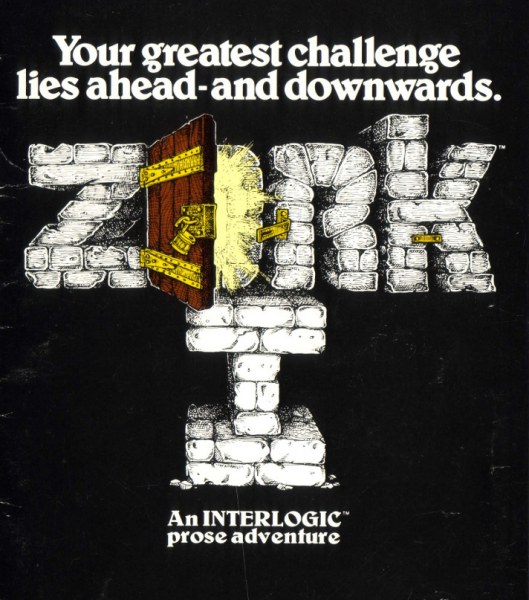 born. But one does not need to have experienced every period of the gaming history to appreciate the loving care that went into this book, nor to understanding just how monumental the changing gaming industry has become in the structure of our society. And this is only in considering CRPGs (eschewing the many other game genres that exist today).
As a budding game designer myself, there is also much for me to appreciate in how different game development is today than it was even ten years ago, let alone back during the time when I was growing up. The book explores development of what came to be modern video game genres, what makes a game an RPG just that and not an adventure game or an action game. While I don’t know that I will be developing any RPGs, video, tabletop or otherwise, I certainly am not going to rule it out. And any video game designer worth his or her salt should want to gain a better understanding of just how a game fits into any given genre. While many of the games discussed in this book do not always fit neatly into the CRPG category, all of them share certain features that define that genre (or rather, were defined over the course of the first couple decades of video game development).
With all that being said, the book was just a pure joy for me to read. I admit to growing nostalgic at times when I read reviews of some of my favorite games growing up. And I felt a bit cheated at times when they covered games I had always wanted to play back in the day, but for one reason or another, I never managed to purchase a copy. And then there were those games that I maybe had heard of, but was glad I had never purchased or even considered before. There was laughter. There was much scratching of my head on reading about some of the weird ideas game designers have had over the years, and also a bit of sadness that some of the most interesting ideas never made it into a successful game.
But love them or hate them, one thing becomes quite clear as you read this book. Gaming, and the acceptance of it into mainstream society, has changed over the years. Early CRPGs were games by nerds for nerds. The common gamer didn’t really exist back in the day, and early game design companies even doubted whether such a crowd could exists. Many text and graphic based CRPGs were brutally hard, and put far greater demands on gamers to take notes and experiment, even to the point of learning what syntax a text parser understood, to advance in the game. Gaming tutorials didn’t exists back then. They are an invention born out of the rise of gaming to the more common, less nerdy crowd. As games came to appeal to more than just the nerds amongst us, the demand for less difficult, and more user-friendly games grew, and features of modern CRPGs, such as automapping and early level tutorials, developed and became the norm.  Console gaming also had a role to play on this front (which is covered to a lesser degree in the book), but the message is clear: gaming slowly, but surely, came to infiltrate every part of our society, until today, we are face a world where gaming, in one form or another, is a part of almost every area in our lives, from movies and comics to esports and the more traditional gaming communities.
And CRPGs stand at the center of that story. This book may be an overly long history of one genre of gaming industry for some. But for me, it is a lively discussion of a history that I watched unfold, that I experienced as both a lover of games, and today, as a budding game designer. There is much to love in this book. Perhaps I do not agree with every view in this book. But that does not detract from the journey taken, nor from the view reached by the end. I will likely reread this book again at some point. And if you haven’t read it yourself but have a love for gaming as I do, I would highly recommend it as a journey worth taking.


 “When a dust storm forces his crew to evacuate the planet while thinking him dead, astronaut Mark Watney finds himself stranded on Mars’s surface, completely alone. Armed with nothing but his ingenuity, his engineering skills–and a gallows sense of humor that proves to be his greatest source of strength–Mark embarks on a dogged quest to stay alive, but will his resourcefulness be enough to overcome the impossible odds against him?”

 “A dazzling novel in the most untraditional fashion, this is the remarkable story of Henry DeTamble, a dashing, adventuresome librarian who travels involuntarily through time, and Clare Abshire, an artist whose life takes a natural sequential course. Henry and Clare’s passionate love affair endures across a sea of time and captures the two lovers in an impossibly romantic trap, and it is Audrey Niffenegger’s cinematic storytelling that makes the novel’s unconventional chronology so vibrantly triumphant. An enchanting debut and a spellbinding tale of fate and belief in the bonds of love, The Time Traveler’s Wife is destined to captivate readers for years to come.”


 Lindenwood’s Awesome Reading Community